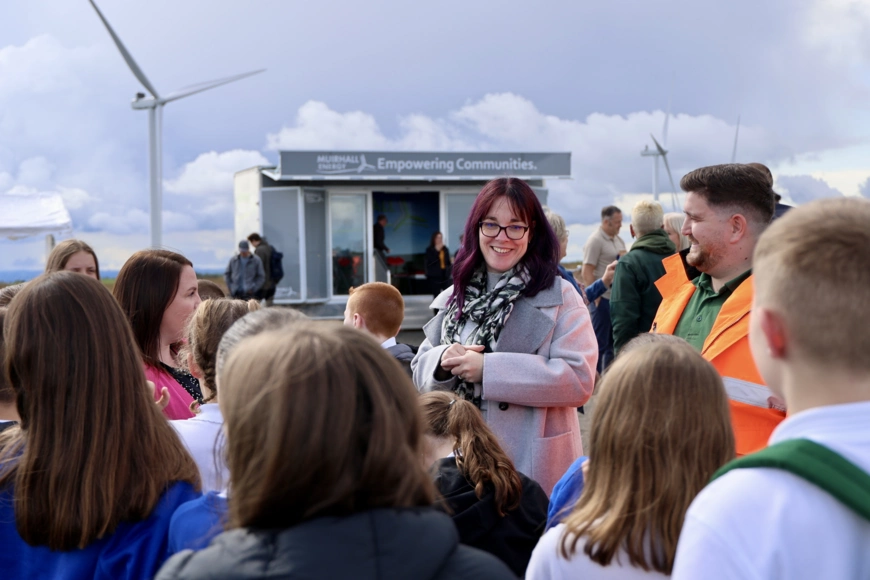
Communities Must Be at the Heart of Scotland’s Renewable Future
The UK is rightly focused on ambitious goals for our energy future, and Scotland has proudly positioned itself as a leader in renewable generation. Yet, as we push ahead with much-needed low-carbon infrastructure, I worry that too many communities are at risk of being left behind.
But that doesn't have to be the case. Here at Muirhall Energy, Scotland’s leading independent renewables developer, we hold a simple but firm belief - communities must be placed at the very front of the development pipeline, not simply trail behind it. Renewable energy can be a tremendous engine for economic and social good in rural Scotland, but only if we treat local people as true partners, and do so from day one.
The focus of public discussion on onshore wind and other renewable projects is often too negative or, frankly, too simplistic. Much of the debate boils down to one question: "How much money will the developer offer?" But this misses the bigger picture of the wider societal and legacy benefits at a local, regional and national level. This narrow focus on monetary contributions misses a much broader, more transformative opportunity. Yes, community benefits are essential, but they are not the end of the story.
At this pivotal moment for Scotland’s clean energy future, we have a real opportunity to elevate the conversation. Instead of benefits being viewed as a transactional add-on from developers, they can become a reflection of genuine partnership, meaningful stakeholder engagement and help to unlock wider opportunities for community wealth building with a local and regional focus.
The impact can be life-changing. Critical energy investment, such as in our Glen Ullinish II project in Skye, could directly support local housing, strengthen local economies, provide long-term investment for skills and facilities, and help keep young people in the local area. They can underwrite projects that communities themselves prioritise - projects that create employment, promote resilience, and deliver a meaningful, visible return from the energy generated right on their doorstep. They also contribute significant business rates income (£2.4m per annum in the case of Glen Ullinish II), shared ownership opportunities and help us to deliver a more energy secure future for the country.
But this all depends on strong relationships, and those don't happen by chance. For us, real, best-practice community engagement, well over and above the statutory minimum, is the bedrock of any sensitively designed and socially grounded development. It is not a formality that can be rushed. It demands early, open conversations, transparent communication, and a willingness to pivot our proposals to local visions and issues. It means approaching a development not with a fixed blueprint, but with a plan to listen first.
This is why best-practice engagement, and a sector leading £7,000 per MW of energy generated community benefit package, is at the core of every Muirhall project. We don't see communities as mere consultees; we see them as collaborators. This change in perspective is crucial: projects gain true local support when communities feel genuinely heard and respected.
What matters to a community isn't the size of a cheque - it’s the clarity and longevity of the impact. Across the projects we have delivered, we’ve witnessed the power of this approach time and time again: vital services provided, social enterprises expanded, shared ownership realised, community facilities modernised, and crucial initiatives made viable. These benefits continue long after the construction dust has settled. We must ensure these positive outcomes become the norm as Scotland builds its renewable energy potential.
Part of the change we need is shifting the tone of our public discourse at all levels. Too often the debate is dominated by the loudest, rather than the broad and diverse voices that really make up communities. This imbalance discourages those who understand, and genuinely welcome the benefits a project can bring, from speaking up.
We must create space for these voices. If not, they will continue to be drowned out and
conversations will remain narrow and negative, far less representative than they should be.
The energy transition will transform our economy and landscape, but it must also recast our approach to community partnership. If Scotland and the UK is to achieve its climate ambitions while supporting the fabric of its rural communities, those communities must not just be consulted - they need to be engaged in decision-making, empowered, and brought forward as the industry's essential partners.
If we get this right, our renewable infrastructure will do more than just supply clean power, it will enrich the places that host it. That future, I believe, starts with listening on both sides of the debate.
Sarah McIntosh
Managing Director
Muirhall Energy